
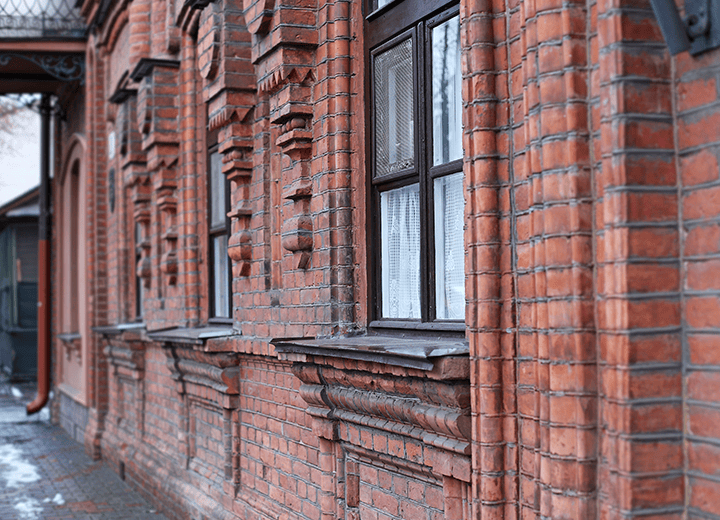
Brownstone and Stone Pointing NYC
Stone pointing in NYC for brownstone, limestone, granite, and bluestone. We repoint stone joints with mortar matched to the stone, keep fine joints fine, and clean the face without harming it.
- Brownstone, Limestone & Granite
- Fine Joints Kept Fine
What Is Brownstone and Stone Pointing?
Stone pointing is repointing the mortar joints between blocks of stone rather than bricks. The idea is the same, worn mortar out and new mortar in, but stone changes almost everything about how it’s done. Joints on a brownstone or limestone facade are often much thinner than brick joints, the mortar has to suit the stone instead of the brick, and the stone face can be damaged by tools and cleaners that brick would shrug off.
On many NYC brownstones, the original joints were cut so fine they’re barely visible from the sidewalk. When those joints are ground out carelessly, they end up twice as wide, and when they’re filled with hard gray cement, the soft stone on either side starts to break down. Good stone pointing keeps the joint narrow, matches its color to the stone, and uses a mortar that’s softer than the stone it sits between.
Stone and Brownstone Repointing in NYC, Joint by Joint
Stone facades forgive very little. A widened joint, a smear of mortar across the face, or a cleaner that’s too strong leaves marks that can’t be undone. We work slowly and by hand where the stone needs it, and we plan every job around the type of stone on your building.
Brownstone Row House Joints
Fine joints on brownstone fronts, stoops, and trim repointed in mortar tinted to the stone.
Limestone & Granite Facades
Joints on apartment buildings and townhouses repointed with mixes suited to each stone.
Stone Trim & Coping
Sills, lintels, cornices, and coping stones repointed so water stays out of the joints.
When Stone Joints Need Repointing
Open joints in stone are easy to miss because the joints are so thin to begin with. Looking at the wall in low, angled light makes them much easier to spot.
These are the problems we see most on NYC stone facades, and several of them point to earlier work that was done the wrong way.
Open Joints Between Stones
Gaps where mortar has washed out of the fine joints.
Mortar Smeared on the Stone
Old repairs spread across the stone face instead of the joint.
Dark Streaks Below Joints
Water staining that runs down from open or failed joints.
Joints Ground Too Wide
Earlier repointing that widened the original fine joints.
Cement Patches on Soft Stone
Hard gray mortar sitting next to crumbling stone edges.
Loose Sills & Coping
Stone trim shifting because its joints have failed.
How We Repoint Stone Facades in NYC
Every stone behaves differently, so the method starts with the stone and not with the mortar.
01
Stone & Joint Assessment
We identify the stone, measure the joints, and note any earlier repairs before choosing a mix.
02
Careful Joint Clearing
Thin joints are cleared by hand so the stone edges stay sharp and the joints stay narrow.
03
Mortar Mixed to the Stone
The mix is tinted to the stone and kept softer than it, often with lime.
04
Fine Finishing & Cleaning
Joints are finished flush or to their original profile, and the face is cleaned with stone-safe methods.
Landmark and Inspection Rules for NYC Stone Facades
NYC’s stone buildings are among its most protected and most inspected, and both affect how their joints are repointed.
Landmark Stone Joints
On landmarked brownstones and stone buildings, LPC reviews repointing, including how the new joints look against the stone.
FISP on Stone Buildings
Open joints in limestone and granite facades, cornices, and trim are common findings on buildings over six stories.
Pointing With Brownstone Repairs
Brownstone patching and joint pointing often happen together, and on landmarked buildings both fall under LPC review.
Stone Types We Point and How Each Is Handled
The stone on your building decides the mortar, the tools, and the cleaning method.
Brownstone
A soft, layered sandstone with very fine joints. It needs a soft, stone-colored mortar and gentle hand work.
Limestone
Smooth and pale, and sensitive to acidic cleaners. Joints are matched closely to the stone’s light color.
Granite
Very hard and durable. Its joints still need a mortar weaker than the stone and matched in color.
Bluestone
Common on steps, sills, and caps. Its joints take heavy wear and are repointed to keep water out.
Why Owners Trust Us With Their Stone Facades
Stone repointing is where rushed work shows the most. Wide joints, stained faces, and hard patches stay visible for decades. For a sense of pricing, see our brick pointing cost guide.
Joints Kept Narrow
The original joint width protected, never ground wider.
Stone-Safe Cleaning
No harsh cleaners on limestone or brownstone faces.
Mortar Matched to the Stone
Color and hardness chosen for the stone, not the brick.
Honest About the Stone
If the stone surface needs restoration, we'll tell you.
What NYC Owners Say About Our Stone Pointing
4.6 /5
“Our brownstone had several joints that were cracked and washing out. The pointing work was done carefully around the existing stone, and the front of the property now looks much more maintained.”
Brownstone and Stone Pointing Projects in NYC
Stone Pointing Services Across NYC & Westchester
Brownstone rows fill whole neighborhoods in Brooklyn and Manhattan, and limestone and granite buildings stand in every borough. We repoint stone throughout four NYC boroughs and Westchester County.
- Bronx
- Brooklyn
- Manhattan
- Queens
- Westchester
Brownstone & Stone Pointing FAQs
Yes. Stone joints are often much thinner, the mortar has to be matched to the stone instead of the brick, and stone faces need gentler tools and cleaning. The goal is the same, sound joints that keep water out, but the method is more careful.
Brownstone needs a mortar that's softer than the stone and tinted to its color, so the joints wear instead of the stone. On older buildings this is often a lime-rich mix. Our lime mortar repointing page explains why.
Not usually. Flaking or peeling stone is a problem with the stone surface, and it's repaired through brownstone restoration, not pointing. Open joints can let water into the stone and make it worse, though, so we check both and tell you what your facade actually needs.
Usually not. Granite is much harder than brick, and its joints are often finer and a different color. The mortar still needs to be weaker than the stone, but it's mixed and colored for granite rather than for the brick around it.
Gently. Mortar residue is removed while it's still soft, and any cleaning after that uses methods safe for the stone. Harsh acidic cleaners can etch limestone and damage brownstone, so we don't use them on either.